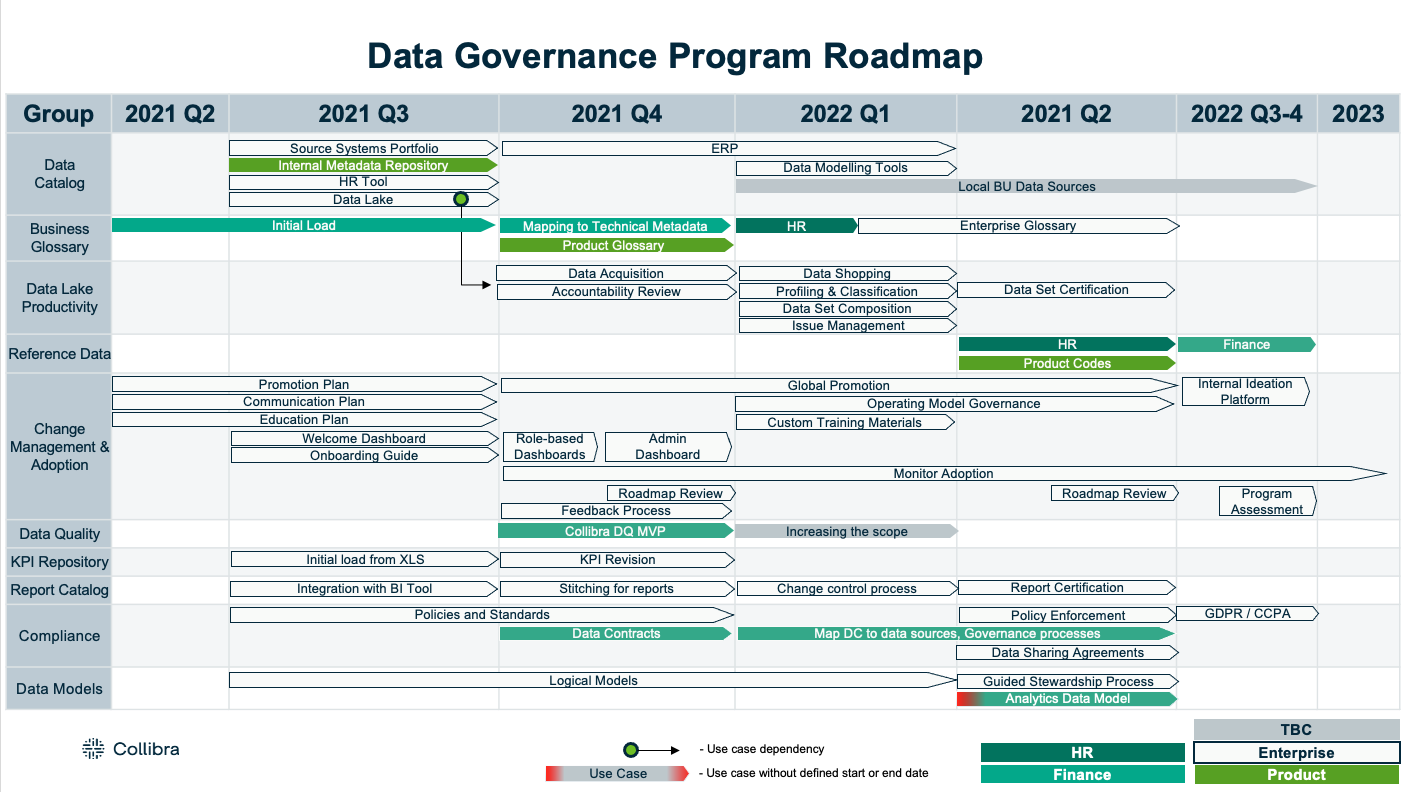
Data Intelligence Tip: use case roadmap
At the beginning of the Data Intelligence Journey, it’s important to pay attention to the complementarity of the use cases. Precisely selected and grouped use cases ensure that the generated business value will grow faster with every next use case implemented. So picking up the use cases we need to think about the target audience, complementarity of the content, and joint usage scenarios.
For instance, if we start from the catalog, probably it will make sense to choose between getting insights about data quality, adding more business context to it, or establishing an operating model that will serve as a basis for future governance processes.
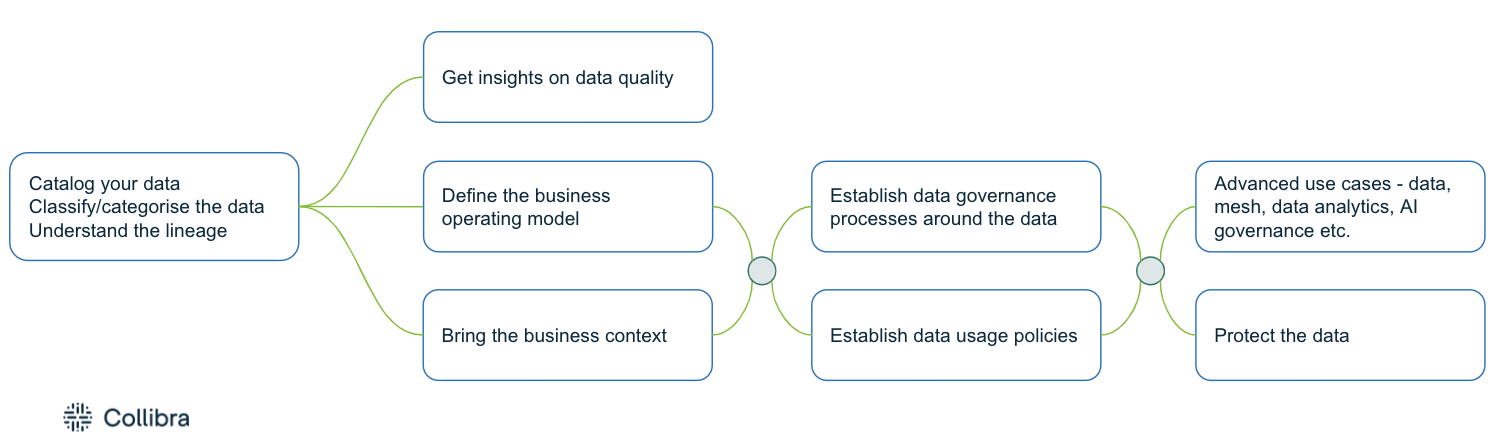
This understanding of the program direction will help in the roadmap design. Do not skip this step in the attempt to implement the first use cases ASAP. Building the roadmap, at the beginning of the Program, is absolutely vital. The absence of the roadmap makes users and stakeholders confused since they don’t know what’s going on, and what and when to expect from the program. Just a few examples of typical problems in the program without a roadmap:
- Low adoption - one of the reasons why we need a roadmap is to align with the business priorities, without it, there is a risk of a failure to meet user expectations because implemented use cases are not most critical for the users
- Missed deadlines - implementation of the data governance use cases requires the collaboration of the business stakeholders and technical people. The absence of a roadmap won’t allow us to do the resource planning on a decent level
- Low ROI and in the worst-case scenario collapse of the whole program - building the roadmap we always think about the value that each of the use cases will bring to the business. Without it, we won’t have enough transparency to be able to get the full support from the business stakeholders and end users, which will inevitably lead to the adoption issues
Roadmap Example: